If you’re looking to start a homebased direct mail business today, especially as a small publisher armed with a computer and printer, you’re definitely not alone. Many folks over 50, often with decades of expertise in a specific field, are now turning their passion or specialized knowledge into a flexible side gig.
Thanks to print on demand services and AI tools, launching a direct mail business from scratch is more doable than ever, even if you’re working with a tight budget. Here’s a no-nonsense guide to getting off the ground, even if you’re brand new to the scene.
Why Start a Homebased Direct Mail Business Now?
A lot of people assume print is old-fashioned, but the numbers show direct mail remains a powerful way to connect with niche audiences, and often even more than digital ads. Businesses spent over $40 billion on direct mail marketing last year, with response rates that outpace most email campaigns (source). People in smaller, focused communities tend to trust printed newsletters and info products, especially when they come from an expert.
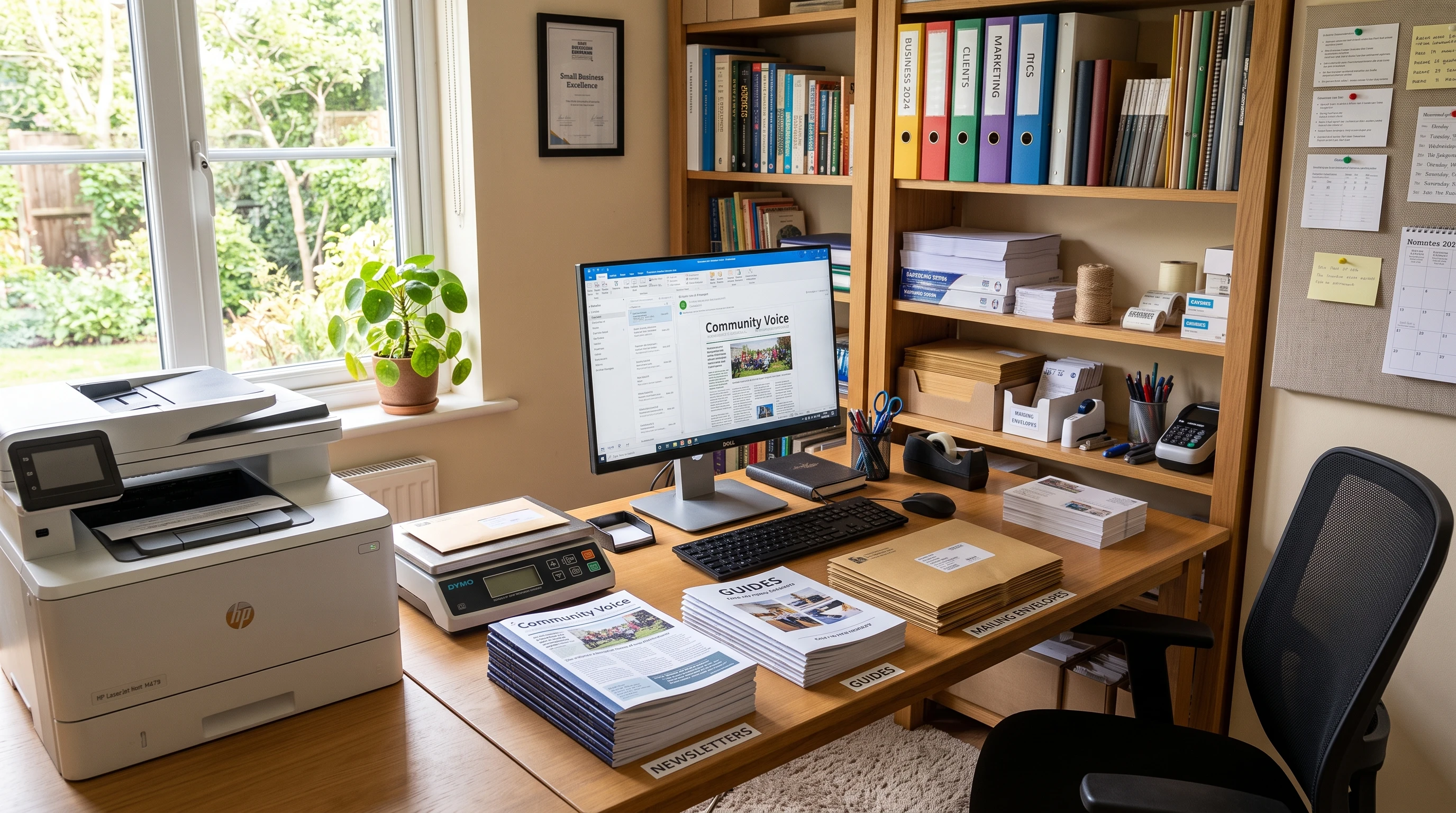
The best part? You don’t have to run a giant operation. Many successful home publishers work from a spare room or even their kitchen table, using a regular inkjet or laser printer and free or low-cost software. Catering to a small but loyal niche lets you offer real value, as well as a personal touch while also keeping costs under control.
Another huge advantage—mailboxes are no longer overloaded like they used to be. With less competition, your message stands out. Print engages the senses; people touch it, see it, and often read printed information more carefully. Direct mail is ideal for reaching audiences who are offline, not staring at screens all day, or simply trusting of printed words over flashy ads or clickbait. Plus, print campaigns have a longer shelf life.
A well-crafted newsletter or tip sheet can sit on someone’s coffee table for weeks, generating repeated brand exposure for practically no extra effort. It’s also a practical fit for local organizations, clubs, and community groups who want to foster closer connections with their members.
First Steps: Equipment and Setup for New Publishers
You only need a handful of tools to launch. Here’s what I started with (and still use every day):
- Reliable Computer: Any PC or Mac from the last few years will get the job done. If you can run Microsoft Word or Canva, you’re set.
- Home Printer: Go for an allinone printerscanner. A laser printer is better for bulk, but an inkjet works if you’re just starting out or printing smaller runs.
- Mailing Supplies: Get a stash of #10 envelopes, mailing labels, and a cheap postage scale. A label printer can save time if you’re mailing a lot.
- Software: Free tools like Canva, Google Docs, and GIMP are great for design and layout. If you want more polish, try Affinity Publisher or Adobe InDesign.
- Email Account and File Backups: Keep everything organized in cloud storage (Google Drive or Dropbox are super handy for this).
It doesn’t take a fancy studio. Just a clean space where you can focus and spread out your work helps. Over time, you can upgrade as your business grows.
Don’t forget ergonomics. A good chair, proper lighting, and somewhere to sort outgoing mail will make even long work sessions much more comfortable. If you plan to scale up, think about a simple shelving system to keep paper, envelopes, forms, and test prints separate and easy to find.
Choosing Your Niche and Audience
This is probably the most important part, especially if you want to stand out against digital noise. Most small publishers find the best success when they focus on a tightly defined niche. Think of communities that value specialized knowledge, such as vintage car fans, birdwatchers, or local gardeners.
If you’re over 50 and have years in a trade, hobby, or industry, you’re sitting on gold. Create information products that solve very specific problems. Print newsletters, howto guides, and tip sheets that speak right to your group’s needs.
- Start by listing things you know well, like old skills, unique solutions, or lessons learned.
- Browse forums and Facebook groups to spot common questions or complaints.
- Find a group that isn’t drowning in competing offers and genuinely wants print materials.
When narrowing your audience, go for topics with ongoing, not just one-time, needs. For example, support newsletters for caregivers or specialty gardening calendars. If you’re active in hobbyist or professional associations, tap those built-in networks for your first customers.
Building and Testing Print Information Products
Avoid huge print runs at the start. Use your home printer and print on demand services to make small batches. Here’s a quick process that works well for most info publishers:
- Draft Short, Helpful Content: Use AI writing tools (like ChatGPT) to brainstorm and create first drafts or outlines. Focus on problem/solution topics.
- Design Simple, Clear Layouts: Platforms like Canva or Publisher let you make neat, easy to read templates. Stick to one or two fonts and keep visuals simple.
- Print Samples for Yourself: Before mailing anything, proof your guides or newsletters. Adjust margins, proofread, and check that it’s legible.
- Mail Test Copies: Start with 10 to 20 mailings to friends, family, or hobby contacts. Ask for honest feedback.
This approach keeps costs super low and lets you tweak your content before offering it to a wider audience.
Consider testing both single-page letters and multi-page kits, as well as using color versus black and white, to see which gets the best response in your audience. Use print on demand for larger test batches so you don’t get stuck with unsold inventory.
How to Market and Sell Your Direct Mail Products
Marketing a homebased direct mail business looks a bit different from promoting a blog or social page, but some things work across the board:
- Build a Mailing List: Every customer is an asset. Offer a free sample or tip sheet in exchange for a mailing address on your website or social profile.
- Networking in Your Niche: Post in relevant forums and local groups (online and off). Let people know what you offer, focusing on how your print products help.
- Bundle Products: Combine newsletters with miniguides or exclusive tips to add extra value.
- Offer Print Plus Digital: Let buyers choose print, digital, or both. Some people want a PDF backup along with their hard copy.
- Referral Bonuses: Give small discounts or bonus material when readers refer a friend.
Print out flyers or postcards and ask about leaving them at local clubs or meeting spots. Oldschool approaches still work great with people who prefer print. A friendly in-person chat can often do more for your brand than endless digital ads. You can also arrange cross-promotions with related local businesses, such as teaming up with an independent bookstore to distribute your newsletter or leaving stacks at a popular shop.
Challenges and How to Handle Them
- Managing Costs: Printing and postage add up. Use print on demand when possible, print only what you sell, and keep pages short but valuable.
- Staying Organized: Cloud storage and simple project management tools like Trello help you keep content, addresses, and invoices straight.
- Finding New Customers: Consistent outreach makes a big difference. Set aside time weekly to check in with your niche through mail, email, or social posts.
- Adapting Content: Stay current. Trends and problems switch up, so adjust your topics seasonally or after big news in your field.
- Handling Fulfillment: Schedule your print and mailing days. Preprint labels and stage envelopes ahead for faster turnarounds.
Managing Costs
Home printers work fine for short print runs. For anything over 50 copies, local print shops or online services like Vistaprint can often save money. Shop around for the best postage rates and avoid expensive colors or heavy paper unless your audience really cares.
Another way to manage costs is to batch your print jobs so you spend less time switching tasks or resetting equipment. Order paper and envelopes in bulk as your business grows to unlock discounts. Keep a running tally of your expenses and earnings to make sure your pricing covers all your overhead, including time spent on each mailing.
Adapting Content Efficiently
Tracking reader feedback is valuable. A simple feedback card in your mailings or a quick followup email can show you which topics hit home. AI tools help you draft articles or analyze questions quickly. Updating your products is way easier with digital templates. Just adjust, print, and mail. Stay flexible: your first newsletter might not be perfect, but that’s exactly why regular updates matter.
Pro Tips To Take Up Your Direct Mail Game a Notch
Once you’re settled with the basics, here are a few handy tricks that can really help:
Use AI for Planning & Research: AI chatbots and content tools can draft outlines, organize ideas, or suggest popular article topics. They’re not just for writing; think audience analysis and competitive research, too.
Automate Where Possible: Spreadsheet templates, merge tools, and address label software can speed up admin so you focus more on content.
Focus on Relationship Building: Personal notes, hand-signed letters, and unexpected extras go a long way. People remember that care, and often tell friends about it.
Stay Legal and Ethical: Use only opt-in lists. Stay in touch with regulations around bulk mail. Even small mailers need to play by the rules. USPS’s Every Door Direct Mail program is worth checking out for local reach.
Don’t forget to monitor your results. Tracking which mailings get the highest response rates helps you make smarter decisions. Keep detailed lists of buyers, referrers, and which headlines work best. Small tweaks can lead to way bigger results next time around.
FAQs: Starting and Growing a Homebased Direct Mail Publishing Business
How much does it cost to set up a small direct mail business at home?
Most people get rolling for under $500, mainly for a good printer, paper, envelopes, and initial postage. If you already own a computer and software, your biggest outlay might be marketing and test mailings.
Is there a minimum print volume for print on demand?
Most print on demand services will do as few as one copy at a time. That’s awesome when you’re experimenting or serving a small but devoted audience.
How do I find topics my niche wants?
Pay attention to forums, niche Facebook groups, Q&A sites, and even what’s trending on Amazon for books in your area. Direct feedback from your early customers is gold.
What’s the best way to keep content fresh and up to date?
Block out monthly brainstorm sessions. Set Google Alerts or follow trends with AI research tools. Aim for relevance over volume.
Final Thoughts
Running a homebased direct mail business lets you combine your hard-earned knowledge with the power of targeted print. You can start small, scale at your own pace, and build real relationships with readers who appreciate your experience.
Every print run is a chance to help someone, share what you know, and even create a new retirement income stream, all from your home office or kitchen table. With a little persistence and a focus on quality connections, your home direct mailing adventure can grow into something personally and financially rewarding.