If you’re ready to build a business that fits around your life, launching a direct mail home business could be just the ticket. This kind of business is all about sending physical mail, like newsletters, catalogs, flyers, or even self-published booklets, to people interested in what you’re offering. Thanks to today’s print on demand tools and simple low-cost gear, starting up from home is doable and surprisingly affordable.
What Makes Direct Mail a Good Work from Home Business?
Direct mail may sound old-school, but it’s remained relevant in the digital age because it stands out and gets noticed. For new entrepreneurs, it’s a practical way to kick off a business from home since you don’t need fancy tech, coding skills, or a lot of startup cash. You can begin with basic equipment, such as a printer, a computer, envelopes, and a healthy dose of creativity.
Small publishers and info marketers have used direct mail for decades, simply because it consistently delivers results for selling info products, home courses, or even personalized notebooks and planners. Print on demand services mean you don’t need a garage full of inventory. You’re free to print or order only what you need, when you need it, keeping things flexible and efficient.
Step-by-Step Guide: How To Start Your Direct Mail Home Business
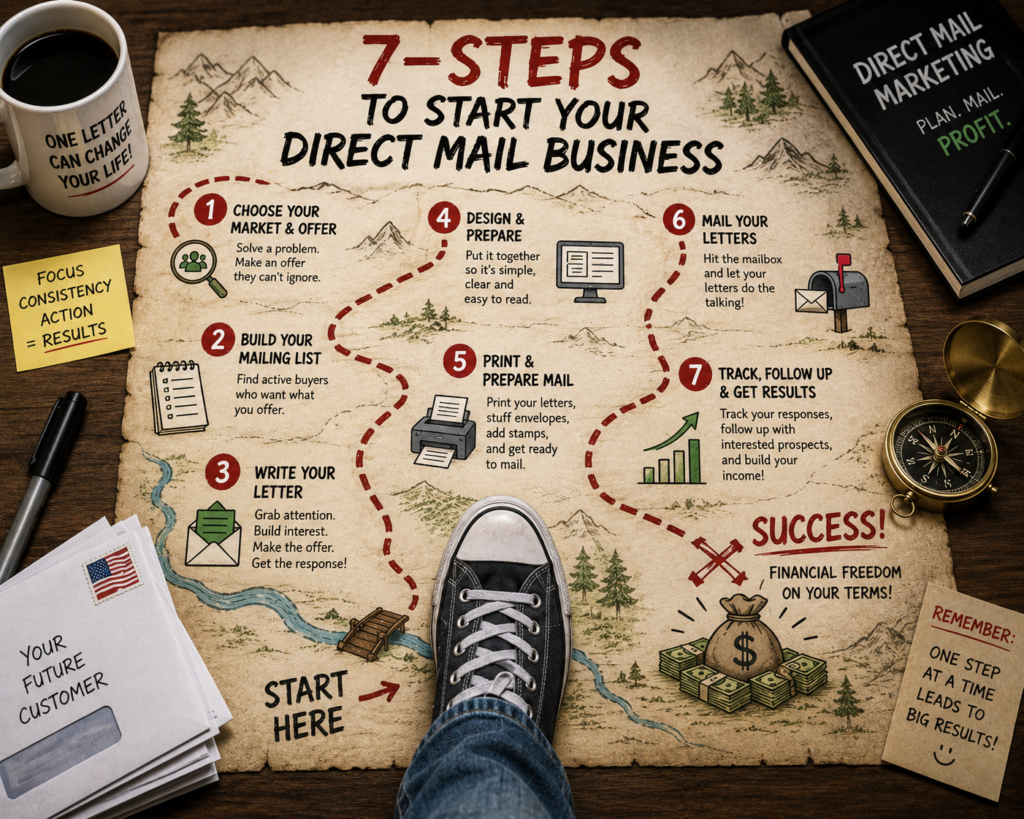
Kicking off your business doesn’t have to feel overwhelming. Here’s a simple seven-step guide so you know exactly where to start and what comes next.
- Choose Your Niche: Go with a subject you enjoy or know a lot about. This could be anything from gardening tips to DIY crafts, self-help guides, or homeschooling resources. By sticking with a tight niche, you make your mailings more personal and valuable, helping you build trust faster.
- Create (or Source) Your Products: Decide if you want to make your own info products, such as newsletters, printed manuals, recipe cards, or planners. Alternatively, you can use print on demand services for things like workbooks and guides. Canva and Google Docs are both great free tools for your designs and layouts. Beginners can stick with these without expensive software.
- Set Up Your Basic Equipment: Starting doesn’t mean investing in commercial gear off the bat. A dependable inkjet or laser printer, sturdy paper, envelopes, and a computer will serve for most small mailings. If you want to avoid the hassle as you grow, print on demand services can handle everything from printing to shipping, making life easier.
- Build or Buy a Mailing List: Begin by gathering names and addresses from your website, blog, or social media followers. Offer a free sample, checklist, or mini-booklet as an incentive for their address. If you’d like a quicker start, rent or purchase targeted mailing lists from reputable brokers. Thorough research ensures you pick list sources wisely and avoid bad data.
- Design Your First Mailer: Great mailers keep it straightforward—a catchy headline, a warm greeting, and a clear call to action. Use bold colors to grab attention, but don’t crowd the page. For those not confident in design, templates from tools like Canva help give your mailers a polished finish.
- Mail Out and Track Results: Start with small batches. Note which products or offers draw a response so you can double down on what works. Tracking can be simple, like using coupon codes, unique landing pages, or asking buyers where they heard about you.
- Follow Up and Expand: Add everyone who responds to your main customer list. Send thank you notes, updates, and special offers regularly. Building personal relationships goes a long way in direct mail.
What You Need to Know Before Spending Money
Jumping into direct mail is exciting, but there are a handful of things to keep in mind to stay profitable and avoid rookie mistakes.
- Printing Costs: Begin with smaller test runs to see what your audience likes. Home printing is perfect for small runs, but as your order volume grows, local print shops or print on demand can save you money. Always ask for quotes first.
- Postage: Mailing costs can add up, so check USPS rates for letters, flats, and bulk discounts. Even small savings per mail piece add up fast. Also, consider “Every Door Direct Mail” for local campaigns.
- List Quality: Your results depend on a dialed-in mailing list. Make sure addresses are current and always clean up undeliverables after each send. Keeping your list clean saves you money over time.
- Legal Requirements: Direct mail marketing needs to follow local privacy and advertising rules, such as honoring “do not mail” requests. Include a return address and a way for people to opt out for best practice.
Printing at Home vs. Print on Demand
Printing at home gives you more control over production and keeps initial costs down. However, sending more than 50 to 100 mailers monthly can get tiring, and your home printer might wear out quickly. Opting for print on demand services means less work on your end; although it may cost more per piece, the convenience and time saved often justify the slight premium.
Finding Your Audience
Direct mail delivers the best results when it’s zeroed in on the right people. Try reaching out to Facebook groups, community message boards, or forums in your niche. Exchanging newsletters with other business owners is another method to reach a broader crowd.
Advanced Tips for Direct Mail Success
After nailing the basics, try these tactics to get a better return on your efforts:
Add Bonuses and Freebies: Toss in a sticker, recipe card, or mini-zine with every order. This encourages repeat orders and word-of-mouth buzz.
Mix Up Your Formats: Using postcards, large envelopes, or mini-booklets can help your mail stand out. Try different formats to see which style your audience responds to best.
Personal Touches: Including first names and hand-signed notes sets you apart from generic mailings and makes people feel special.
Easy Tracking: Add short tracking codes or ask folks to mention an offer when ordering. This lets you know what campaign works best. A simple Google Sheet is handy for tracking, with no need for premium software.
Team Up with Local Print Shops: Neighborhood printers often offer better prices and fast turnaround for small runs. Plus, their advice could help you step up your mailings.
Real World Examples: What Can You Send?
Mailing physical products from home opens up tons of creative ideas. Here are some real examples from successful home direct mail business owners:
- Monthly Membership Newsletters: Hobby enthusiasts love getting insider info on crafts, vintage cars, or niche hobbies directly at home.
- Home Education Booklets: Parents and tutors appreciate affordable workbooks, lesson plans, or curated resource pages delivered to their door.
- Lowcost Zines: Creatives send mini-magazines on topics like comics, poetry, or art to small but dedicated fanbases.
- Custom Planners and Journals: Print on demand helps creators offer branded planners and journals, sent out as orders come in.
- Postcard Series: Facts about travel, recipes, or motivational tips, shipped as sets to loyal subscribers.
Frequently Asked Questions
Starting a direct mail venture often raises similar questions. Here are concise answers to the most asked:
How much does it cost to start a direct mail home business?
You can kick off with a few hundred dollars, especially if you have a computer and printer already. Your largest expenses are how many pieces you mail, list purchasing, and postage fees.
Is it legal to mail out advertising or info products from home?
Yes, as long as you follow your local and federal rules, include a return address, and respect “do not mail” requests. USPS offers clear guidelines you should read through first.
Can you run a successful direct mail business with no technical skills?
Definitely! Today’s home publishing tools are simple, with easy-to-edit templates. You won’t need to code or use any expensive software to start.
Ready to Start? What’s Next
Launching a direct mail business from home is a very practical way to make money from your own ideas with minimal risk. Sticking with basic tools means you won’t get overwhelmed, and there’s a real sense of accomplishment in mailing useful info that people actually enjoy receiving. In a digital-heavy world, that personal, physical touch helps your business get noticed more easily.
Grab your favorite idea, decide on your first mailer, and take that important first step today. The best part? You control how fast or slow to scale things up, and you really can keep it as simple as you like.